

How to Calibrate a Grain Moisture Tester: A Step-by-Step Guide
Knowing how to calibrate a grain moisture tester helps farmers and commercial grain facilities make better harvesting, drying, storage, and marketing decisions. Before peak harvest activity begins, operators should inspect the tester, confirm that its software and grain calibrations are current, run repeatable samples, and compare the results with a trusted reference.
Calibration procedures vary by manufacturer and model. Some instruments allow users to install official grain calibration files or make approved bias adjustments, while other corrections require trained service technicians. Always follow the operator’s manual for the exact tester being used.
Quick Answer:
To calibrate a grain moisture tester, clean and inspect the instrument, verify its settings and calibration files, prepare a representative grain sample, run several tests, and compare the average with a trusted reference result. Do not make unsupported internal adjustments. When readings remain inconsistent or outside the manufacturer’s tolerance, schedule professional calibration and service.
What Does Grain Moisture Tester Calibration Mean?
Calibration aligns a tester’s calculations with an established reference method so its moisture results remain dependable. The USDA Agricultural Marketing Service explains that official calibrations use instrument coefficients developed from maintained reference methods, rather than estimates made from a single grain sample.
For most farm operators, the practical first step is verification: determining whether the tester produces repeatable results that agree closely with a trusted elevator, inspection agency, laboratory, or properly maintained reference instrument. An operator should only change offsets or load calibration files when the manufacturer’s instructions specifically permit it.
How to Calibrate a Grain Moisture Tester Step by Step
1. Identify the Tester Model and Review Its Manual
Record the manufacturer, model, serial number, software version, and installed grain calibrations. Different testers use different calibration procedures, so instructions for one unit should never be applied automatically to another.
For DICKEY-john equipment, the manufacturer’s grain moisture tester calibration center provides model-specific calibration downloads and instructions, making it important to select the exact instrument before installing anything.
2. Clean and Inspect the Instrument
Disconnect the tester as directed in its manual and remove loose grain, fines, dust, and residue from accessible areas. Inspect the test cell, hopper, temperature sensor, power cord, and moving components for contamination or damage.
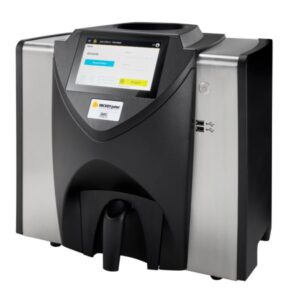
Because precision instruments depend partly on proper cleaning and maintenance, the DICKEY-john GAC 2700 operator guidance emphasizes maintaining the instrument rather than compensating for a mechanical or cleanliness problem through software adjustments.
3. Confirm the Correct Grain and Calibration Version
Select the correct commodity before running a test. Corn, soybeans, wheat, and specialty crops require different calibration data, and choosing the wrong grain can invalidate the result.
Commercial and official operations should also confirm whether required UGMA calibration files are current. The USDA’s moisture equipment and calibration resource publishes official meter information, calibration files, installation instructions, and check-testing procedures for supported instruments.
4. Prepare a Representative Sample
Use clean grain that represents the larger lot rather than relying on kernels collected from one convenient location. Remove obvious foreign material only when the tester’s instructions require it, and avoid testing samples outside the unit’s stated temperature or moisture range.
Temperature differences can affect moisture results. Purdue Extension’s guidance on the proper use of moisture meters recommends allowing hot grain to cool slowly in a sealed container before testing so moisture does not escape and distort the comparison.
5. Run Multiple Tests
Run the same prepared sample at least three times, following the same loading method each time. Record every result instead of keeping only the reading that looks correct.
Closely grouped results suggest the tester is repeatable. Large variations can indicate inconsistent sample loading, contamination, worn components, unstable temperature, or an instrument problem that calibration alone may not correct.
6. Compare the Average with a Trusted Reference
Average the repeated readings and compare that figure with a reliable reference measurement from an elevator, inspection agency, laboratory, or known reference meter. Make sure both parties test portions of the same representative sample under similar conditions.
A difference does not automatically justify changing the tester. First repeat the process and confirm the commodity selection, sample temperature, calibration version, and loading method.
7. Apply Only Approved Adjustments
Some testers permit a bias or offset adjustment, while others use downloadable calibration bundles. Follow the manufacturer’s exact procedure and document the original setting, comparison results, adjustment, and date.
For operators who do not have a reliable reference sample or who continue seeing unacceptable differences, Corn Belt Testing offers professional grain moisture tester calibration and repair for supported DICKEY-john equipment. The service page also provides manuals, calibration resources, software information, and a repair form.
When Is Professional Calibration or Repair Needed?
Professional service may be appropriate when results remain inconsistent after cleaning and retesting, the unit displays recurring errors, readings differ substantially from a trusted reference, or the tester has been dropped, exposed to moisture, or damaged during transport.
When repair costs, parts availability, or repeated downtime make continued service impractical, compare the existing unit with current grain moisture testers for farm and commercial use. Corn Belt Testing lists DICKEY-john options for farm users, commercial facilities, and specialty-crop operations.
Frequently Asked Questions
How often should a grain moisture tester be calibrated?
A grain moisture tester should be checked before harvest and whenever its readings become inconsistent. The exact service interval depends on the model, usage, operating environment, and manufacturer’s recommendations. Commercial facilities may also need to follow specific inspection, calibration-update, or check-testing requirements.
Can I calibrate a grain moisture tester myself?
You can usually clean the tester, confirm its settings, install manufacturer-approved calibration files, and compare results with a trusted reference. Internal repairs and unauthorized adjustments should be avoided because they may create larger errors or affect the unit’s compliance, depending on the model.
Why does my tester give different readings on the same grain?
Different readings may result from uneven samples, inconsistent loading, grain temperature, fines, dirty testing components, or worn parts. Run several tests using the same properly prepared sample. Continued variation after cleaning and controlled retesting may indicate that the tester needs service.
Should I compare my tester with the local elevator?
Yes, provided both parties test portions of the same representative sample under comparable conditions. One isolated comparison is not enough to establish a correction, but repeated differences can help identify whether the tester, sampling process, temperature, or selected calibration needs attention.
Is it better to repair or replace an older moisture tester?
The answer depends on the tester’s condition, parts availability, accuracy, repair cost, and the needs of the operation. A service evaluation may show that cleaning, calibration, or component replacement is sufficient. Units with repeated failures or outdated capabilities may be better candidates for replacement.
Get Reliable Grain Moisture Tester Support
Learning how to calibrate a grain moisture tester begins with careful cleaning, representative sampling, repeatable testing, and comparison with a reliable reference. Model-specific calibration files and adjustments should always follow the manufacturer’s instructions.
For calibration or repair, use Corn Belt Testing’s service and support resources. When an older unit no longer meets your operation’s needs, review available grain moisture testers before deciding whether to repair or replace it.
Phone: Call Jim at 1-866-845-6249
Email: jimd@cornbelttesting.com
Website: Corn Belt Testing