

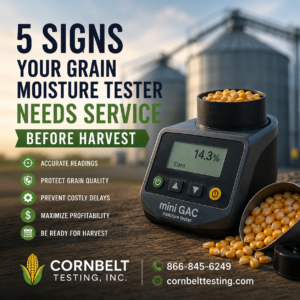
5 Signs Your Grain Moisture Tester Needs Service Before Harvest
As harvest season approaches across the Midwest, farmers and commercial grain operators are busy preparing equipment, inspecting storage facilities, and planning for another successful harvest. One critical piece of equipment that often gets overlooked until it’s needed most is the grain moisture tester.
A properly functioning grain moisture tester helps ensure accurate drying decisions, protects grain quality, and can help prevent costly dockage at delivery. If your equipment hasn’t been inspected recently, now is the perfect time to identify potential problems before harvest begins.
At Cornbelt Testing, Inc., we help producers throughout the Corn Belt maintain reliable grain moisture testing equipment so they can enter harvest with confidence.
📞 Phone: 866-845-6249
🌐 Website: https://www.cornbelttesting.com/
What are the warning signs that a grain moisture tester needs service?
Common warning signs include inconsistent moisture readings, differences between farm and elevator results, slow performance, visible wear, calibration issues, and equipment that hasn’t been serviced in several years. Addressing these problems before harvest can help prevent downtime and costly grain quality issues.
Sign #1: Inconsistent Moisture Readings
One of the most common indicators that your tester may need service is inconsistent results when testing similar grain samples.
If you’re seeing significant differences between tests of the same grain lot, calibration drift, sensor issues, or internal component wear may be affecting accuracy.
Many producers rely on the professional calibration and repair services available through the Cornbelt Testing Service & Support Center to ensure dependable performance before harvest begins.
Sign #2: Elevator Results Don’t Match Your Readings
A small variation between your readings and those from a commercial elevator is normal. However, consistently large differences may indicate that your tester requires calibration or inspection.
Accurate moisture readings are essential because they directly impact:
- Grain pricing
- Drying decisions
- Storage management
- Marketability
Addressing these discrepancies before harvest can help eliminate surprises at delivery.
Sign #3: Your Moisture Tester Hasn’t Been Serviced Recently
Many moisture testers continue operating for years without major issues, but that doesn’t mean they shouldn’t be inspected.
If your tester hasn’t been serviced, calibrated, or professionally evaluated in several seasons, preventative maintenance can help identify small issues before they become larger problems.
The team at Cornbelt Testing works with both farmers and commercial grain facilities to help maintain equipment accuracy throughout the harvest cycle.
Sign #4: Physical Wear and Damage
Harvest environments can be tough on equipment.
Dust, vibration, temperature swings, and regular use can eventually affect performance. Visible signs of wear may include:
- Cracked housings
- Damaged displays
- Worn buttons or controls
- Corrosion
- Loose components
Regular inspections help identify these issues before they impact testing accuracy.
Sign #5: Slow Performance or Error Messages
If your tester takes longer than normal to process samples or displays recurring error messages, it may be time for professional service.
Ignoring these warnings can increase the likelihood of equipment failure during harvest when accurate moisture testing is needed most.
The Iowa State University Extension Grain Storage Resources provide additional information on protecting grain quality and implementing best practices for grain handling and storage.
Why July Is the Ideal Time for Grain Moisture Tester Service
July provides an excellent opportunity to prepare before harvest activity begins.
Benefits of servicing equipment now include:
- Reduced risk of harvest delays
- Improved testing accuracy
- Increased confidence in grain management decisions
- Better storage outcomes
- More time to address potential repairs
Waiting until harvest can result in scheduling delays and limited service availability as demand increases.
Grain Moisture Tester Calibration Helps Protect Profitability
Proper calibration remains one of the most important factors in accurate grain moisture testing.
According to industry best practices promoted by organizations such as the National Grain and Feed Association (NGFA), accurate testing plays a vital role in grain handling, storage management, and quality control.
Routine calibration helps ensure:
- Consistent moisture readings
- Improved grain quality management
- Better drying decisions
- Reduced risk of spoilage
Frequently Asked Questions
How often should a grain moisture tester be serviced?
Most grain moisture testers should be inspected and calibrated before each harvest season and periodically during heavy use.
Why do my moisture readings differ from the elevator?
Differences can occur due to calibration issues, sample handling, temperature variations, or equipment condition.
Can inaccurate moisture readings affect grain profitability?
Yes. Incorrect readings can result in overdrying, spoilage, dockage, and reduced grain value.
Is July a good time to service grain moisture testing equipment?
Absolutely. July provides time to identify and address issues before harvest demand increases.
Where can I get my grain moisture tester serviced?
Cornbelt Testing provides professional calibration, repair, and support services for grain moisture testing equipment throughout the Midwest.
Trust Cornbelt Testing Before Harvest Begins
Harvest success starts with accurate information. Making sure your grain moisture tester is operating properly before harvest can help improve efficiency, protect grain quality, and reduce costly surprises.
If your equipment is showing any of these warning signs, contact Cornbelt Testing today.
📞 Call 866-845-6249
🌐 Visit https://www.cornbelttesting.com/
For additional grain testing insights, visit the Cornbelt Testing Media & Grain Profit Tips section.